

To get indexed on Google faster, check if a website crawlable, submit important URLs in Google Search Console, and maintain an updated XML sitemap. Strengthen internal links, build high-quality backlinks, and regularly publish fresh content to attract Googlebot. Removing duplicate or thin pages and improving site speed also help accelerate indexing.
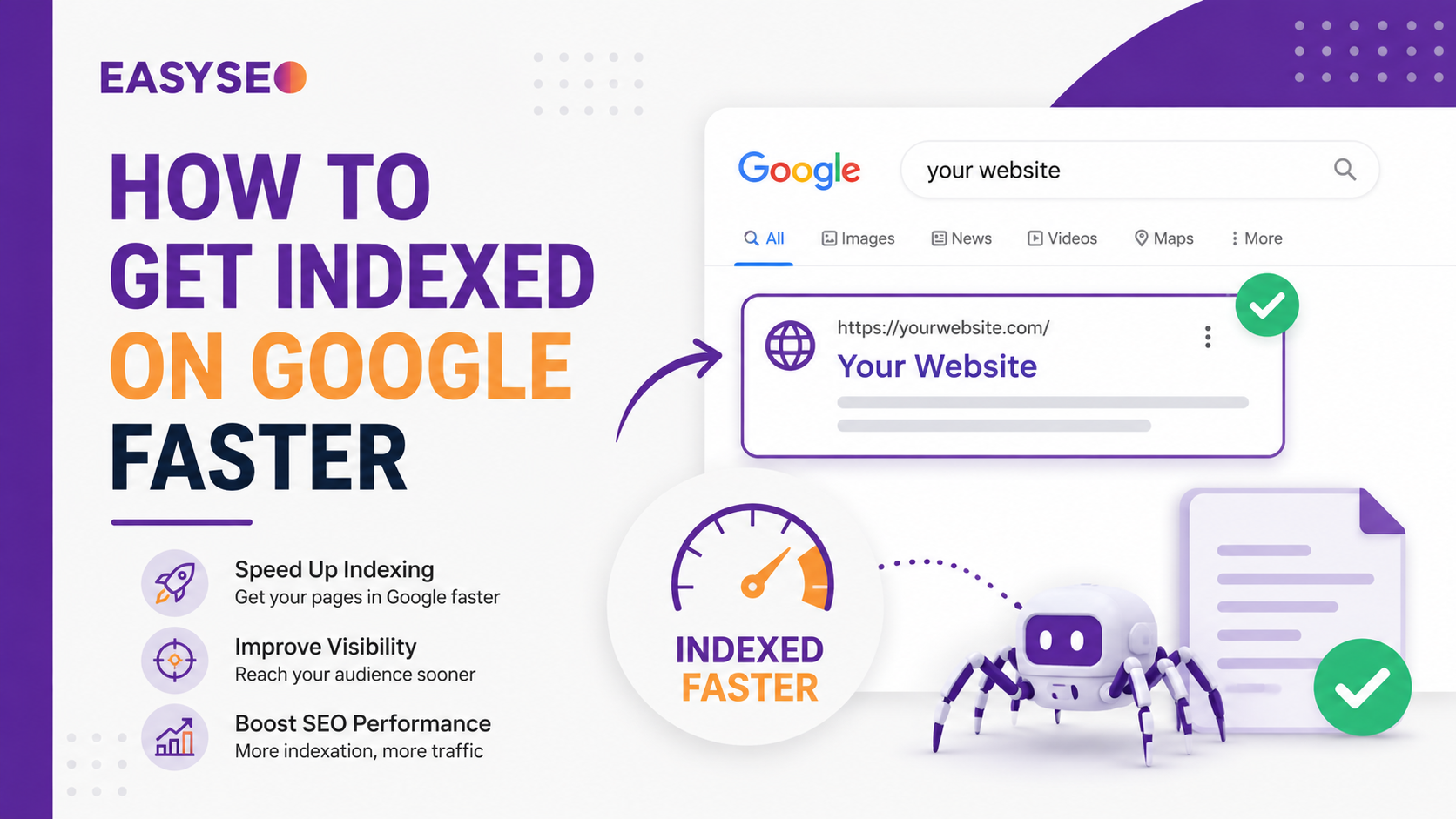
EASYSEO uses technical SEO optimization, structured sitemaps, and continuous monitoring to ensure that new pages appear in Google Search as quickly as possible.
What It Means to Get Indexed by Google
Google indexing means that Google has discovered, analyzed, and stored a web page in its searchable database. Once a page is indexed, it becomes eligible to appear in search results when users enter relevant queries. Without indexing, even high-quality pages remain invisible to searchers.
EASYSEO ensures that every important page on a client’s website is correctly crawled, processed, and added to Google’s index. Through technical optimization and proper metadata management, the agency helps websites gain full visibility in organic search.
Read more: What is Google indexing →
Why Fast Indexing Matters for SEO and Visibility
Faster indexing allows new content, updates, and products to appear in Google Search sooner. Delayed indexing means that search engines and users may not see recent changes for days or weeks. Rapid indexation is especially important for time-sensitive industries like e-commerce, news, or seasonal promotions.
EASYSEO accelerates indexing by improving crawl accessibility, optimizing sitemaps, and strengthening internal link structures. The faster Google recognizes a page, the quicker it can start ranking and driving organic traffic.
Common Reasons Your Website Isn’t Indexed Yet
New Website or Recently Published Pages
New websites often take time to be discovered because they lack backlinks and crawl history. Googlebot prioritizes established domains with frequent updates. EASYSEO accelerates discovery for new websites by submitting sitemaps, building internal links, and connecting the site to Google Search Console immediately after launch.
Crawl Errors or Robots.txt Restrictions
Incorrect robots.txt settings or server errors can block Googlebot from accessing key pages. Pages returning 404, 500, or 503 codes are also excluded from indexing. EASYSEO audits crawl logs and robots.txt files to ensure that important content is not accidentally restricted. Proper crawl permissions and error resolution guarantee that Google can reach and analyze every page.
Duplicate or Thin Content Issues
Duplicate or low-quality content signals to Google that a page may not offer unique value, leading to exclusion from the index. EASYSEO identifies and consolidates duplicate pages using canonical tags, and enriches thin pages with original, entity-focused content. This improves site credibility and increases index inclusion rates.
Slow Loading Speed or Technical Problems
Pages that load slowly or rely on blocked scripts are harder for Google to crawl efficiently. Server response time, render-blocking resources, and unoptimized code can all delay indexing. EASYSEO optimizes page speed, removes unnecessary scripts, and ensures that all critical resources are accessible. A fast, technically sound website allows Googlebot to crawl and index content faster and more consistently.
How to Get Indexed on Google Faster (Step-by-Step)
Step 1: Submit URLs in Google Search Console
Submitting URLs manually through Google Search Console is the fastest way to request indexing. Enter each page in the URL Inspection Tool and click “Request Indexing.” EASYSEO uses this method after publishing or updating key content to prompt immediate crawling. This ensures Googlebot discovers and processes new pages without waiting for automated crawls.
Step 2: Create and Maintain an XML Sitemap
An XML sitemap guides Googlebot through your website’s structure. Submitting an updated sitemap helps Google find and index all relevant URLs efficiently. EASYSEO builds dynamic sitemaps that refresh automatically when new content is added. Clean, error-free sitemaps speed up discovery and improve crawl frequency across all sections of the website.
Step 3: Strengthen Internal Linking
Internal links guide crawlers to new or deeper pages. EASYSEO creates strong internal linking networks between home, category, and blog pages. Using keyword-rich anchor text provides context to Google about each page’s topic. A logical linking structure improves crawl depth, ensuring that even recently added content gets indexed quickly.
Step 4: Build Quality Backlinks for Discovery
External backlinks help Google find and trust new pages faster. When reputable websites link to your content, Google treats it as a signal of authority and relevance. EASYSEO builds natural backlinks through outreach, guest posts, and content promotion. These links drive both referral traffic and faster indexing by improving crawl priority.
Step 5: Share New Pages on High-Authority Platforms
Sharing new content on platforms like LinkedIn, X (Twitter), Reddit, and niche directories helps generate external signals. These pages often get crawled frequently, which accelerates discovery of linked URLs. EASYSEO uses strategic content promotion to create indexation triggers, ensuring that Googlebot encounters new URLs sooner through trusted sources.
Step 6: Keep Content Fresh and Updated
Google prioritizes active websites that publish and update content regularly. EASYSEO maintains freshness by updating existing pages, adding new internal links, and improving metadata. Regular updates encourage more frequent crawling and keep the website relevant in search results. Consistent publishing builds authority and ensures continuous index inclusion.
Technical Tips to Speed Up Indexing
Optimize Crawl Budget and Server Response
Google allocates a specific crawl budget to each website based on authority, freshness, and performance. If the server responds slowly or returns too many errors, Googlebot reduces crawl frequency. EASYSEO improves crawl efficiency by fixing broken links, compressing files, and optimizing server response times. Efficient resource delivery ensures that Googlebot spends more time crawling new pages instead of reprocessing errors.
Use Canonical Tags and Avoid Duplicate URLs
Duplicate URLs confuse crawlers and waste crawl budget. Canonical tags signal which version of a page should be indexed. EASYSEO audits websites for duplicate or parameterized URLs and applies canonical tags correctly to consolidate authority. This helps Google focus on the preferred URLs, speeding up the indexing process and preventing content dilution.
Ensure Mobile-Friendliness and HTTPS Access
Google’s index primarily evaluates mobile versions of websites. Pages that fail mobile usability tests or lack HTTPS security may be crawled less frequently. EASYSEO ensures every site is responsive, uses SSL certificates, and loads correctly across devices. Mobile-friendly, secure pages improve user experience and increase the likelihood of fast and complete indexation.
Enable Structured Data for Better Understanding
Structured data helps Google interpret a page’s meaning and context. Schema markup highlights key entities like products, services, and reviews, allowing Google to categorize content more efficiently. EASYSEO implements validated schema across all pages to enhance understanding and index coverage. Clear structured data helps new pages get indexed faster and appear with rich features in search results.
Tools and Methods to Track Indexing Progress
How to Use the Site: Operator and URL Inspection Tool
The site: operator and URL Inspection Tool are the simplest ways to check if your pages are indexed. Typing site:yourdomain.com in Google Search shows all indexed URLs under your domain. The URL Inspection Tool in Google Search Console reveals detailed index status and crawl history. EASYSEO uses both tools to identify missing pages, verify new indexation, and track changes after updates or migrations.
How to Monitor Crawl Stats and Coverage Reports
Google Search Console provides Crawl Stats and Index Coverage reports that show how Googlebot interacts with your site. These reports highlight indexed, excluded, and error-prone URLs. EASYSEO reviews crawl data to detect anomalies, such as blocked resources or excessive redirects, and ensures that crawl requests target high-value pages. Regular monitoring confirms that Google continues to index all essential content efficiently.
How EASYSEO Tracks and Validates Indexation
EASYSEO combines manual checks with automated reporting to verify index coverage. The team uses Google Search Console, API scripts, and third-party SEO tools to monitor new and existing URLs. Validation reports include crawl frequency, index status, and visibility trends. This process ensures that no important page remains unindexed and that the entire site maintains optimal search presence.
How EASYSEO Helps You Get Indexed on Google Faster
Technical SEO Audits and Crawl Optimization
EASYSEO conducts in-depth technical SEO audits to identify indexation barriers. The agency reviews server response codes, robots directives, and internal linking structures. Optimizing crawl paths and resource accessibility ensures that Googlebot discovers new pages faster and indexes them more effectively.
Sitemap Management and URL Submission
Accurate XML sitemaps are essential for fast indexation. EASYSEO creates and maintains sitemaps that automatically update when new content is published. The team submits sitemaps directly to Google Search Console and monitors submission status. This ensures that all key pages are continuously visible and crawl-ready.
Fixing Indexing Errors and Improving Crawl Efficiency
Indexing errors such as excluded URLs, broken redirects, and canonical mismatches can slow down discovery. EASYSEO diagnoses and fixes these issues quickly to restore proper coverage. The agency also enhances crawl efficiency by improving site speed, cleaning up duplicate content, and removing orphan pages. These optimizations help Googlebot prioritize new or updated pages, accelerating indexation and strengthening organic visibility.
Best Practices to Maintain Continuous Indexing
Regularly Publish New, High-Quality Content
Google prioritizes active websites that consistently publish valuable content. Regular updates signal that your website remains relevant and trustworthy. EASYSEO helps businesses maintain a steady content schedule focused on expertise, authority, and usefulness. Each new page attracts fresh crawls and strengthens overall index frequency.
Update Old Pages to Keep Them Relevant
Outdated or inactive pages can lose visibility over time. EASYSEO reviews existing content, updates data, improves readability, and refreshes metadata. Keeping old pages aligned with current search intent encourages Google to re-crawl and re-index them. Continuous improvement ensures long-term performance and prevents ranking stagnation.
Monitor Indexation Weekly Using Google Search Console
Regular indexation monitoring detects early signs of technical or content-related issues. EASYSEO tracks index coverage, crawl rates, and excluded pages weekly through Google Search Console. Early detection allows quick fixes that prevent traffic loss or visibility drops. Proactive tracking ensures that all priority pages stay indexed and accessible.
Conclusion: Speed Up Google Indexing with Expert Help
Why Technical Precision and SEO Strategy Matter
Fast and consistent indexing depends on technical optimization and strategic SEO alignment. Without precise configurations, even strong content can remain invisible to search engines. EASYSEO combines data-driven audits, structured sitemaps, and crawl optimization to deliver faster indexation and stable rankings. Proper setup ensures that Google understands, trusts, and prioritizes your pages.
How EASYSEO Ensures Fast and Sustainable Indexation
EASYSEO’s comprehensive approach blends technical expertise with long-term SEO management. The agency eliminates indexation barriers, monitors site health, and maintains regular visibility reporting. Every project includes sitemap management, schema implementation, and crawl validation. With EASYSEO’s guidance, websites achieve faster indexing, stronger organic presence, and sustainable growth in Google Search.

 Loading...